[ About ]
Building the Post-Quantum Future
Meet the team behind Quantum — engineers and researchers securing the next era of blockchain.
Why post-quantum now
Most blockchains rely on classical signatures (ECDSA / EdDSA / Schnorr) for transaction authorization and validator voting. Those signatures are vulnerable to sufficiently capable quantum computers via Shor’s algorithm.
NIST’s first finalized post-quantum cryptography standards (FIPS 203/204/205) were approved and published in August 2024, and the “which algorithms?” question is converging fast enough that systems engineering is worth doing now — not later.
What we’re building
Quantum is built around PQ authorization + PQ scaling, and how that boundary is enforced across the base chain, bridges, wallets, and future settlement layers.
PQ-by-default authorization
PQ signatures aren’t a plugin; they become the default account authorization mechanism.
Consensus for PQ payloads
PQ signature and certificate bytes are treated as a first-class protocol constraint.
Cryptographic agility
We plan for algorithm surprises with clear normal → hedged → emergency modes.
Minimalist architecture
We avoid adding complexity unless benchmarks prove it’s required.
PQ safety for the broader EVM ecosystem
Even before chains migrate at L1, we can materially improve asset custody by enabling PQ-secured smart wallets and tooling that can produce PQ signatures in real workflows.
PQ Wallet Layer (Multichain)
Quantum’s L1 target end state is PQ-by-default. But we can deliver meaningful benefits to users before the rest of the ecosystem migrates by improving wallet-layer custody on existing EVM chains.
Key idea
Even on chains where consensus and base accounts still use ECDSA, assets can be protected inside a smart wallet that only accepts PQ signatures — so even if a user’s ECDSA key is compromised, the attacker cannot move assets held in a PQ-only smart wallet.
MetaMask Snap for PQ signing
in progressVerifier contract deployments
in progressPQ-secured smart wallet
Local PQ signing tool (CLI) + Foundry/Hardhat enablement
More wallet support + native Quantum wallet
Entanglement: Quantum ↔ EVM Bridge
Quantum needs a bridge that preserves a clear boundary:
Nothing mints/unlocks on Quantum unless there is post-quantum (PQ) authorization.
Defense Layer 1
PQ-DVN required
Uses LayerZero v2 as transport and a DVN-based verification stack. PQ-DVN is required for EVM → Quantum verification.
Defense Layer 2
Pending credit → PQ claim() gate
Quantum-side pending credit requires a PQ-authorized claim() call before assets unlock.
Architects of the Post-Quantum Future
Quantum is built by MultiVM Labs, a remote-first R&D lab focused on post-quantum blockchain engineering. We build long-horizon infrastructure: post-quantum security, fast finality, and future distributed quantum execution.

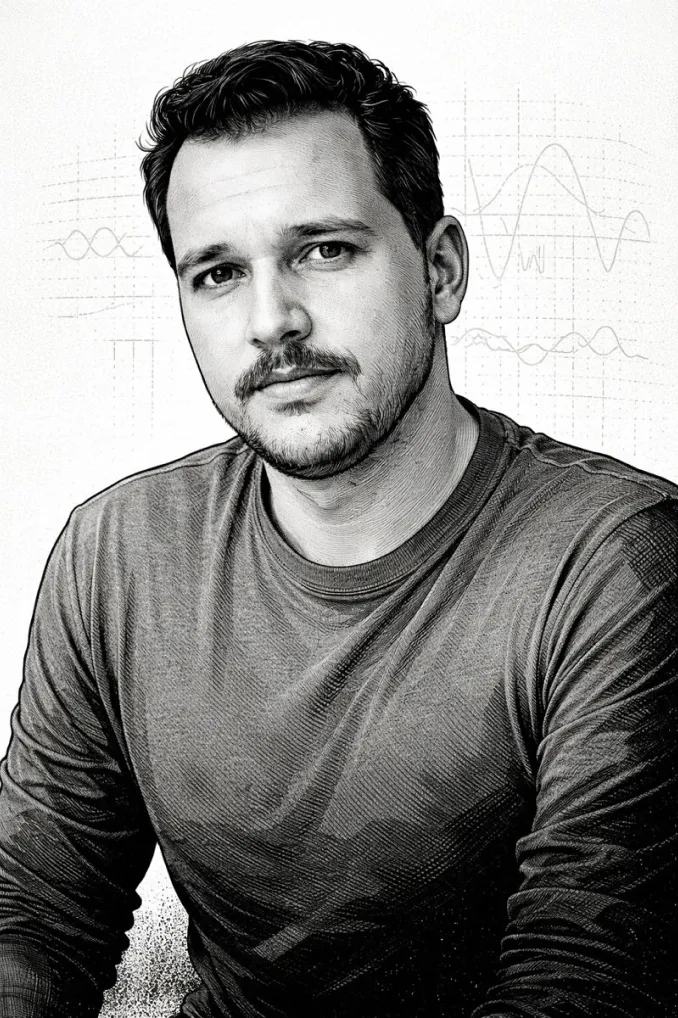







Experience from





Logos are trademarks of respective owners. No endorsement implied.
Roadmap snapshot
Organized as milestones, not a status board. Workstreams run in parallel; sequencing may adjust based on benchmarks, audits, and ecosystem readiness.
PQ Wallet Layer (Multichain) MVP
Quantum L1 Devnet 1 — PQ consensus baseline
Quantum L1 Devnet 2 — PQ userland authorization
Entanglement MVP
Public Testnet + audits
Mainnet + bug bounty